

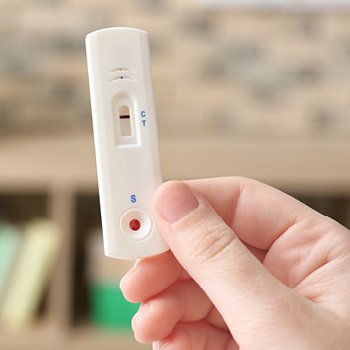
Serological tests enable disease surveillance from initial infection through to the development of immunity against infectious diseases. The power of serological testing comes from the specific detection of patient antibodies generated by the immune system. Here we discuss what serological tests are, why they are used and how the tests work.

What is a serological test?
A serological test is used diagnostically to identify antibodies in a sample of blood serum or other bodily fluid. As antibodies are raised as part of the immune response, the presence of an antibody specific for an infectious agent, (e.g. micro-organism or virion) indicates that the patient has (or has had) the infection. Other purposes of serological tests include diagnosis of autoimmune diseases or blood and tissue typing.
Why test?
Serological tests offer different insights into the nature of the disease than Polymerase Chain Reaction (PCR) or culturing the causative agent. They provide a measure of exposure to the virus even in individuals who are asymptomatic and who may not have been tested by a standard PCR-based assay. Determining exposure in patients who may be unaware they have been exposed but have developed immunity is especially important where environmental restrictions are in place to protect vulnerable or key individuals. An antibody-based serological test can provide results rapidly and cost-effectively.
How does a serological test work?
The principal method of a serological test is that the infectious agent/pathogenic antigen is attached to a sample well or other surfaces, either directly or via a capture antibody. The sample is introduced and if present, antibodies will bind to the antigen. Unbound material is washed away, and any bound antibodies are detected with a secondary antibody conjugated to a reporter molecule such as Horseradish Peroxidase (HRP), 40nm Gold or Biotin, which is then amplified using a reporter-conjugated streptavidin.
Test kit formats
Enzyme immunoassay (EIA), Fluorescent Immunoassay (FIA), ELISA, ELISpot, Lateral Flow Test (LFT) (also known as Strip test or Rapid test) are different formats of serological tests. Some are designed for automated high throughput screening of hundreds of samples simultaneously, others are designed for easy and rapid use in point of care testing.
Anti-Human Antibodies for human diagnostics
JIR Anti-Human antibodies are suitable for the detection of human immunoglobulin isotypes by immunoassay. Manufactured to ISO 9001:2015 certification, JIR antibodies are available in standard and bulk quantities for worldwide shipment.
- Anti-Human IgG
- Anti-Human IgM
- Anti-Human IgA
- Anti-Human IgE